


 A Living Culture, A Place of Healing: Inside the MiWuk Museum & Cultural Center
Walking through the MiWuk Museum & Cultural Center in Angels Camp is not just an educational experience – it is a deeply human one. From the moment visitors step inside, they are welcomed into a space rooted in care, preservation, and healing. This is a place where history and tradition are not frozen behind glass, but honored as something living, breathing, and deeply connected to the present.
The MiWuk Museum & Cultural Center operates as a project of M.A.C.T. Health – Mariposa, Amador, Calaveras, and Tuolumne Health – an organization long dedicated to improving access to healthcare for Native communities. While M.A.C.T. Health is widely known for its medical services, the museum represents an extension of that mission in a different but equally vital way. Here, culture is understood as part of wellness.
As shared by Kirstopher Mandell, Director of Museum Operations, and Katherine Stiltz, Museum Director’s Assistant and Cultural Liaison, “culture is the heart” – and when culture is preserved, respected, and shared, healing can begin. The museum and cultural center exist not apart from M.A.C.T Health’s work, but alongside it, offering a space where cultural connection supports overall well-being for Native community and the broader public alike.
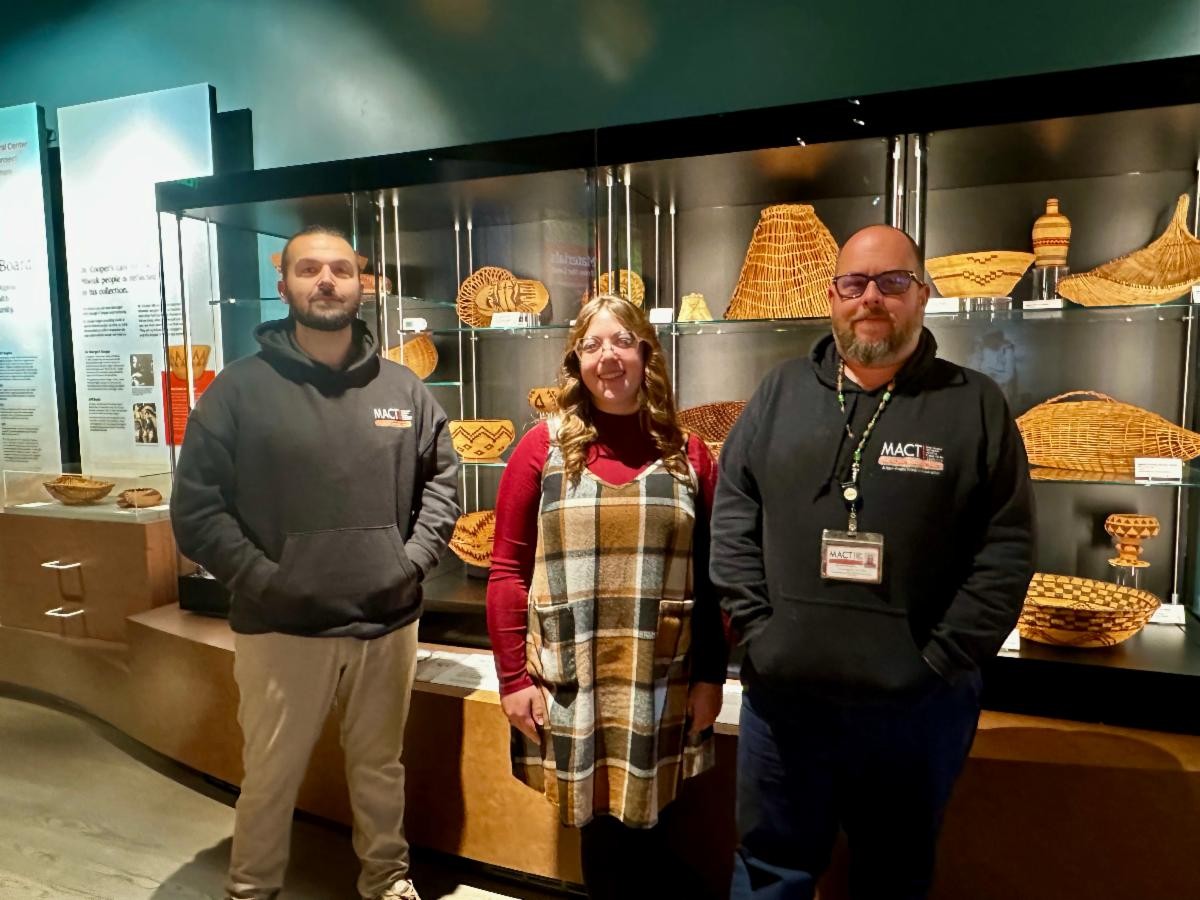
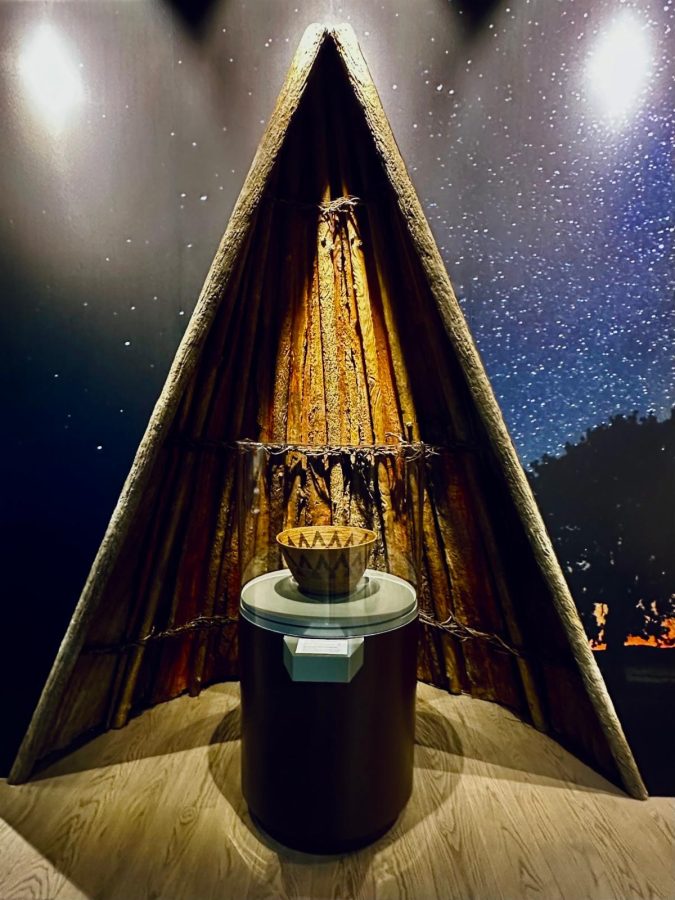
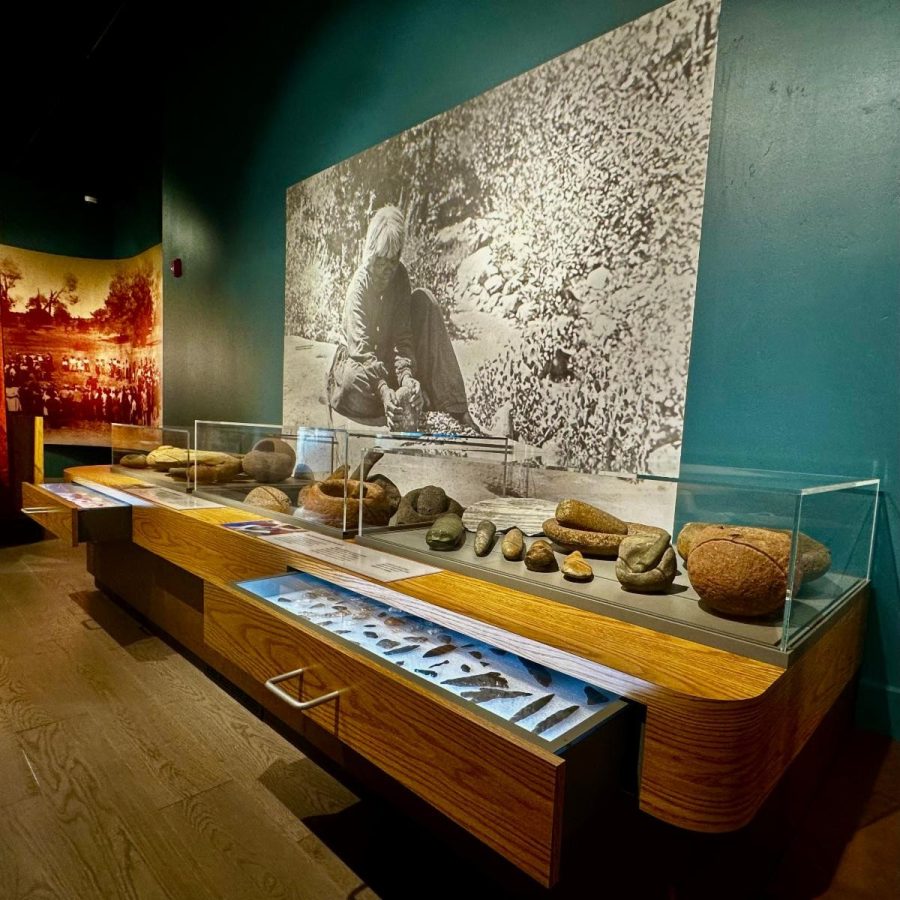
Upon entering the MiWuk Museum & Cultural Center, visitors are welcomed by Alex Ramirez, Museum Host and Research Assistant, who helps set the tone for a thoughtful and immersive experience. During a guided tour with Kristopher and Katherine, it became clear that this space was created with intention at every level. From climate-controlled cases protecting intricately woven baskets to displays highlighting the natural materials used in traditional basketry, the museum emphasizes both craftsmanship and care. Visitors also encounter stone tools and worked points shaped by Miwok ancestors, preserved alongside other cultural items in carefully monitored environments. Each element of the space reflects years of planning, preservation, and deep respect for living tradition.
Throughout the museum, visitors encounter stories that are both powerful and difficult. One section addresses the profound loss experienced by Miwok people through displacement and violence, creating space for recognition of trauma that was endured, not chosen. These moments are not presented to assign blame, but to acknowledge truths that are necessary to understanding the present.
At the same time, the museum emphasizes resilience and continuity. Interactive exhibits are available for visitors to hear tribal songs, learn about traditional basket materials, and watch videos documenting ceremonial dances and ancestral practices such as acorn flour preparation. Some of these practices have never been publicly shared before, offering an experience that is both rare and deeply personal. For many visitors, particularly Miwok elders and tribal community members, these spaces have sparked emotional responses ranging from tears to song and dance. Every experience is different, and all are welcome.
The vision for the MiWuk Museum & Cultural Center has been years in the making – the result of a long-held dream shaped by the M.A.C.T. Health Board and brought to life through collaboration, research, and persistence. For Kristopher, the work was deeply personal. With a masters degree in Art History, and training as a preservationist, he approached the project with a strong sense of responsibility and care for cultural items – particularly the baskets – with the highest level of respect and intention. Guided by the goal to “do it right from the beginning”, he worked from the ground up to ensure the museum honors both the cultural significance of the collections and the people they represent. That commitment is visible throughout the space, where preservation, elder care, and cultural knowledge are thoughtfully woven together.
Community collaboration lies at the heart of the MiWuk Museum & Cultural Center’s story, beginning with the foundational collection gifted to Dr. George P. Cooper in the early 1900s. Dr. Cooper, a physician based in Angels Camp, was known for providing medical care to Native people of the Sierra foothills at a time when many others would not. In gratitude and mutual respect, Miwok families often gifted him intricately woven baskets – offerings that reflected relationship, not transaction.
That collection was acquired by M.A.C.T. approximately 15 years ago, planting the seed for what would eventually become the MiWuk Museum & Cultural Center. What began as an idea evolved over time through listening, learning, collaboration, and deep respect for Miwok culture. As the vision took shape, so did the commitment to care for these items properly and share them in a way that honors both their cultural significance and the people they represent. Today, through the dedicated work of the museum team – including Katherine in the conservation lab and Kristopher’s leadership in preservation – these cultural pieces are thoughtfully protected, studied, and shared, ensuring their stories remain rooted in community and carried forward for generations.
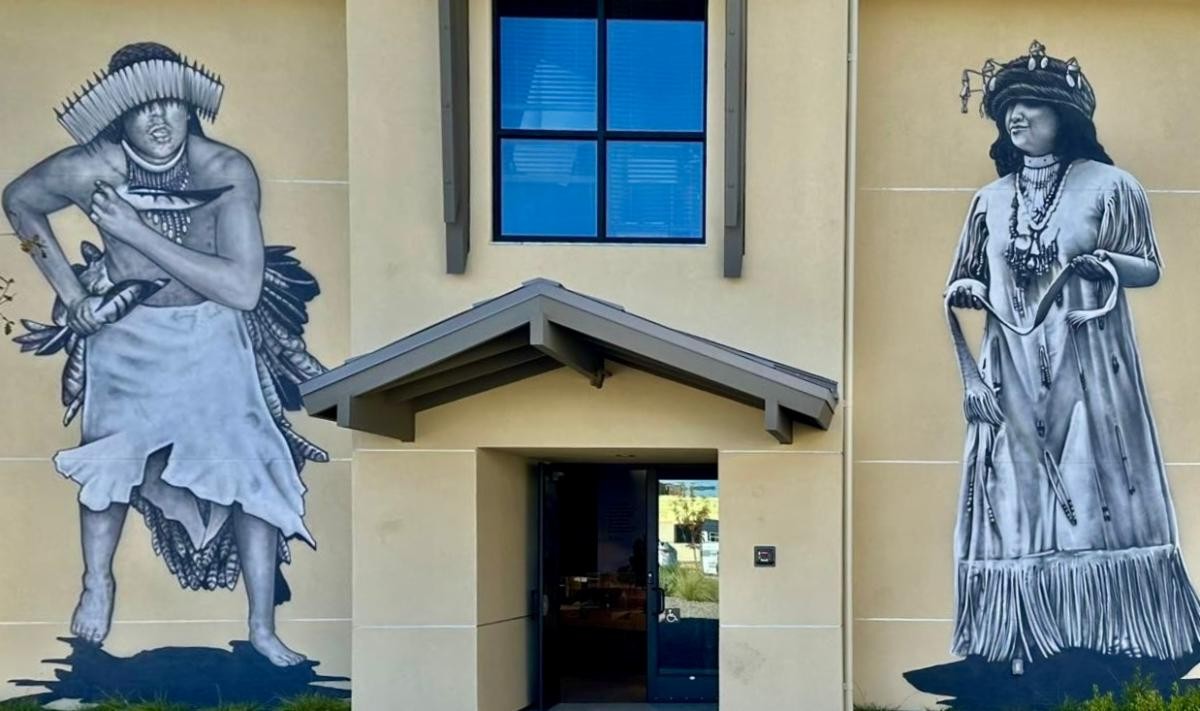
Looking ahead, the MiWuk Museum & Cultural Center continues to grow. Future plans include an outdoor roundhouse, expanded educational programming, a Ramada learning space for hands-on cultural education, and a mobile museum designed to bring culture and history to those unable to visit in person. The museum also welcomes students, researchers, and community members into its library and Language center, reinforcing its role as a shared space for learning, connection and cultural continuity.
More than a building, the MiWuk Museum & Cultural Center is a home for heritage – a place where history, healing, and community come together. It stands as a reminder that preservation is an act of care, and that honoring culture is essential not just for remembering the past, but for strengthening the future.


